.webp)
Every sales team has a version of the same person: The rep who just gets it. They send the perfect follow-up before you even ask. They know when a deal is going cold before it shows up in the forecast. They loop in the CFO at exactly the right moment. Buyers love them. Numbers are consistently high.
The problem is you can't clone them.
At 5 reps, you can survive on one or two high performers carrying the load. The chaos they create is a manageable tax on growth. You pay it and move on. Cross 10 reps, and that tax compounds. Forecasts swing wildly. Managers spend their days chasing updates instead of developing reps. Buyers get inconsistent experiences depending on who picked up the account. The behaviors that made your best reps great never make it into anyone else's motion, because there's no system to carry them.
This is the core challenge of scaling a revenue team: How do you take what your top 20% do naturally and make it the default for everyone?
The answer is documented playbooks, built from your best performers' habits and embedded into how your team works every day. That's where Digital Sales Rooms come in (the right ones, at least – more on that later). When set up correctly, they become the infrastructure that turns playbooks into automated workflows. Not more load on your reps. Processes that run for them.
In this post, we'll look at the five moments in your sales motion where that makes the biggest difference.
Scaling a sales team is more than adding headcount. It requires making sure every new rep ramps fast and executes consistently from day one. The teams that do this well aren't necessarily hiring better people. They're running tighter playbooks: Clear, documented processes for every key moment in the deal cycle that leave little room for improvisation.
The HBR research backs this up. Companies with a formal, documented sales process consistently outperform those that rely on individual rep judgment. When your average rep follows a well-designed playbook, they perform closer to your top performers without needing years of experience to develop the same instincts.
The challenge lies in the enforcement of those playbooks. A process that lives in a Notion doc or a slide deck gets read once during onboarding and forgotten. Managers remind reps in 1:1s. Reps nod. Then they go back to doing it their own way – not out of defiance, but because the playbook isn't where they're working. It's one tab away from where the deal actually lives.
For playbooks to actually change behavior at scale, they need to be embedded into the tools reps use every day. Triggered at the right moment. Easy enough to follow that skipping them takes more effort than just doing it. That's the difference between a process that exists on paper and one that actually runs.
The workflows below are built on that principle. Each one takes a moment in the deal cycle where inconsistency tends to creep in – a follow-up, a stakeholder touchpoint, a handoff – and turns it into something that happens automatically, the right way, every time.

Ask your top rep how they follow up after a demo. Then ask your newest AE. The answers will be completely different, and so will be the outcomes.
Your best performer most likely sends a tailored recap within 30 minutes: Pain points from the call, the right collateral, clear next steps, a deadline. It feels personal and it moves deals forward. Your average rep sends something vague the next day, or worse, forgets to follow up entirely.
At 5 reps, you catch this in 1:1s and coach it. At 10+, you can't be in every deal. The inconsistency compounds and makes more deals die silently mid-funnel.
How the DSR workflow fixes it
When a call ends in Fireflies or Gong, Flowla automatically drafts a personalized follow-up email pulling the key pain points from the transcript, and spins up a branded sales room pre-loaded with the right collateral. The rep reviews it, approves it, and sends – all in one click. No blank page, no "what do I include," no forgetting.
The behavior your best rep does instinctively becomes the default for everyone.
The scaling payoff: ~30 minutes saved per call, faster overall deal velocity (~12%), and a consistent buyer experience from rep one to rep fifteen, without managers having to police it.

Your cowboys find the economic buyer on instinct. They notice when someone new joins a call, research them before the next touchpoint, and loop them in before the deal gets stuck in committee. It's a pattern recognition built from hundreds of deals, not an actual process you can replicate.
Your mid-performers don't have that yet. They build one relationship, ride it, and get ghosted when their champion can't get internal buy-in. At 10+ reps, most of your pipeline is being run by people who haven't developed that instinct, and you're paying for it in late-stage losses.
How the DSR workflow fixes it
When a new contact views the sales room for the first time, Flowla triggers an automatic alert to the rep via Slack, along with context on who the person is and their likely role in the buying process. A personalized intro email is drafted and queued for rep review. The system surfaces the signal and gets the rep to act on it.
The multithreading instinct your top reps have built over years gets operationalized as a trigger-and-prompt for everyone else.
The scaling payoff: Consistent stakeholder engagement across your entire pipeline, not just the deals your best reps are running. Fewer late-stage surprises. Up to 18% win rates on deals that would otherwise stall with a single point of contact.

Deals go quiet. That's not new. What changes at scale is the manager's ability to notice.
When you have 5 reps, you know which deals haven't moved. You're close enough to feel it. At 10+ reps managing 15-20 open opportunities each, no manager has the bandwidth to manually monitor every room for inactivity. Deals sit untouched for two weeks while the CRM shows "in progress" and the forecast looks fine… until it doesn't.
How the DSR workflow fixes it
When a room hasn't been viewed by an invited contact in 7 days, Flowla automatically flags it and drafts a context-aware re-engagement email referencing the last asset the buyer interacted with. The rep reviews and sends. The CRM deal stage is updated. Nothing slips through quietly.
This is what a manager would do if they could watch every deal simultaneously. The system does it for them.
The scaling payoff: ~40 minutes of follow-up effort saved per stalled deal, a measurable uptick in deal revival rate (~9%), and a pipeline that actually reflects reality instead of wishful CRM hygiene.
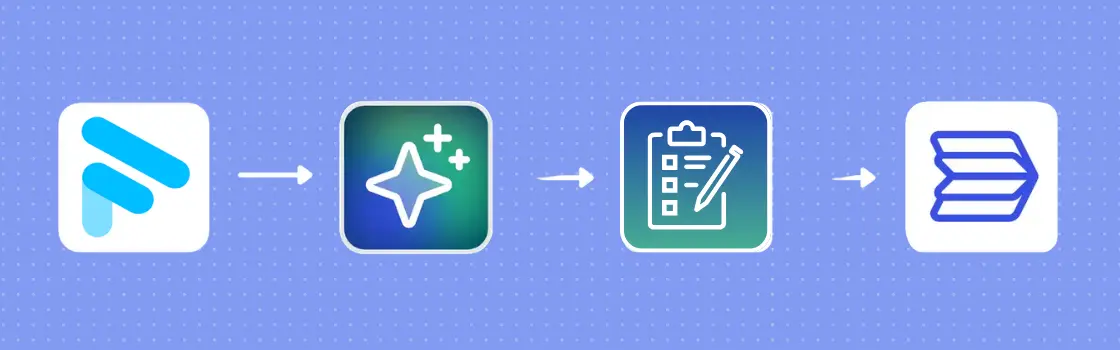
This one is often framed as a rep productivity play. That's real, but it becomes an even bigger issue for scaling revenue teams.
The real problem at 10+ reps is that managers have almost no visibility into what's actually happening inside their deals. They know the stage. They know the amount. They don't know what was said, what was promised, what the buyer's real objection is, or whether the "next step" agreed on the call will actually happen. Forecasting becomes guesswork. Coaching happens too late.
How the DSR workflow fixes it
When a call ends, Flowla auto-generates a structured summary –what was discussed, what was decided, who owns what next – and posts it directly into the sales room and the CRM. Both the rep and the buyer can see it. Suggested next steps are drafted and queued. Nothing lives in someone's personal notes or a Slack DM.
Managers now have a real-time, structured view into every active deal without needing a rep to brief them. And buyers, seeing their agreed next steps in the shared room, are more likely to follow through.
The scaling payoff: Accurate, effortless deal documentation. Faster manager visibility without more 1:1s. Shared accountability between reps and buyers that keeps deals moving.
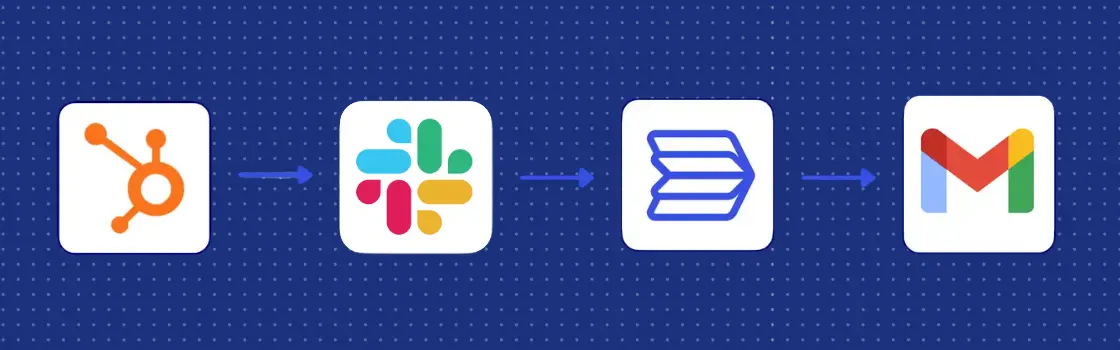
This is the most underrated breaking point in a scaling revenue org and the one that tends to blow up last, when the damage is already done.
At 5 reps, Sales and CS are probably the same people, or at least sitting next to each other. Context travels through conversation. At 10+ reps, they're different teams with different tools, different Slack channels, and no shared view of the deal. The AE knows the buyer's goals, key stakeholders, red lines, and the three things that actually closed the deal. None of that makes it to the CSM. The kickoff call starts from scratch. The customer feels it immediately.
How the DSR workflow fixes it
When a deal moves to Closed Won in the CRM, Flowla automatically generates a handoff summary pulling from the deal notes, call transcripts, and room activity – goals, stakeholders, deadlines, key context. It notifies the CS channel on Slack, creates an onboarding room from a template, and makes the transition seamless without the AE having to write a paragraph-long email to a CSM they've never worked with.
The institutional knowledge that lives in the selling rep's head gets captured and transferred automatically, every time.
The scaling payoff: Faster, more consistent customer onboarding. ~25% fewer kickoff delays. And a customer experience that doesn't reset to zero the moment the deal closes, which is exactly when churn risk is highest.
Not all DSRs are built for teams in growth mode. Some are glorified link-sharing tools. Others are heavy enterprise platforms that are scalable, but take months to implement and require a dedicated admin to maintain. Neither works when you're moving fast and need results now.
Here's what actually matters when you're evaluating a DSR for a scaling revenue team:
Flowla was built with exactly this profile in mind. It connects natively to HubSpot, Salesforce, and Attio (a go-to CRM for scale-ups), integrates with Gong, Fathom, and Fireflies for call-triggered automation, and extends across the full revenue lifecycle from first demo to onboarding and renewal. The workflow automation is configurable without engineering support, and rooms are designed to be fast to create and easy for buyers to navigate.
For teams crossing the 10-rep threshold and starting to feel the cracks, Flowla is the tool that grows with you rather than ahead of you.
Flowla helps you encode your best rep's playbook into your entire team's motion with repeatable workflows
Learn moreBook a 15-minute chat with a product expert. We'll walk you through every step of the way as you get set up.
.webp)
.webp)
.webp)


.webp)

.webp)
.webp)
.webp)




.webp)
%20(3).webp)
.webp)


.webp)
.webp)
.webp)
.svg)

.webp)
.webp)