
Every sales rep remembers their first C-suite meeting. The thrill. The prep. The moment you finally walk into that room and think: This is it.
And then nothing. A polite handshake on the way out. A follow-up email that never gets replied to. A deal that quietly dies somewhere in a conference room you'll never see again. It happens to almost everyone. And almost no one understands why.
Here's something nobody tells you about selling to the C-suite: Getting the meeting is only half the battle.
C-suite executives are actually more open to taking sales calls than directors or managers – 75% will say yes compared to 64% of directors and 59% of managers, according to the industry reports. The problem is what happens after they pick up.
RAIN Group found that 58% of those meetings are considered a complete waste of time by buyers. Not because the product was wrong or the timing was off. The difference between reps who walk out with a follow-up and those who don't is preparation, positioning, and a fundamentally different approach to the conversation.
This post breaks down exactly what that looks like in practice, from the prep work before you ever request the meeting, to how the top performers handle the room, the questions, and what happens after they leave.
The most common mistake in C-suite selling isn't nerves, a weak deck, or poor objection handling. It's a fundamental misunderstanding of what the meeting is actually for.
Most reps treat it like a discovery call. They show up with a list of questions, a product walkthrough, and a hope that the exec will "see the value." The C-suite sees straight through it.
“Most reps blow the meeting before it even starts. Not because their product sucks… but because they show up sounding like a feature brochure with a pulse.” – Haris Halkic
The problem usually starts even earlier, with how reps carry themselves in the room. Low-status signals are subtle but damaging: Over-explaining, rushing through points, asking permission to lead the conversation. Executives are wired to notice these cues, and once they do, the dynamic is set. And by the time the conversation itself starts, the damage is often already done.
Then there's the content of the conversation itself. Reps who show up without specific, quantified insights about the business lose credibility before they've made their case.
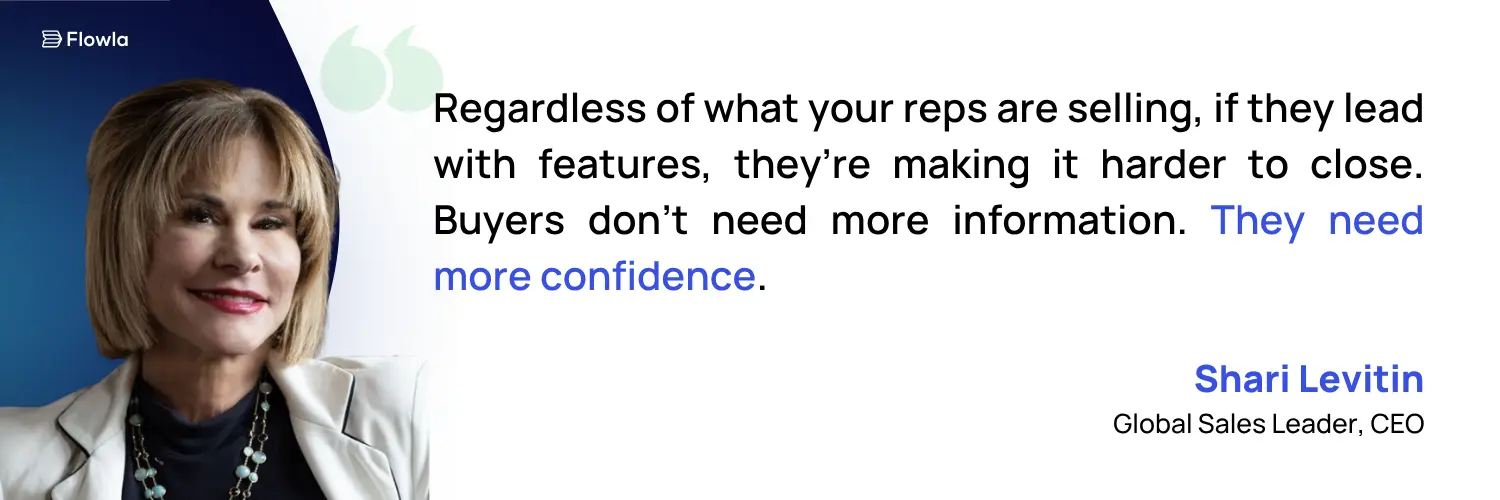
The fix isn't a better deck or a sharper pitch. It's a completely different approach to how you prepare, how you show up, and how you think about the role you're there to play.
The reps who consistently win at the C-suite level prepare differently, show up differently, and think about their role in the room differently. It starts weeks before the meeting and carries through long after it ends. Here's what that looks like in practice.
The biggest temptation in enterprise sales is going straight for the top. Land the CEO meeting, skip the groundwork, make your pitch. It rarely works.
By the time you request a C-suite meeting, you should already know the organisation's priorities, internal tensions, and strategic pressures — well enough to demonstrate that knowledge from the very first minute. That means doing rounds with champions and mid-level buyers first, mapping the org, and building a picture of what actually keeps the executive up at night.
"The worst thing you can do is show up to the C-suite empty-handed. Do a few rounds first. Pay your dues." – Chris Orlob
The data backs this up. Gong’s analysis of nearly one million deals found that the 3rd call with an account is the optimal time to bring executives into the conversation. Too early, and you don't have the context to earn their attention.
Furthermore, RAIN Group research shows that 69% of C-suite buyers are more likely to accept a meeting when a seller leads with primary research relevant to their business – not a pitch, not a demo, but genuine insight about their world.
That research shapes everything: How you open the meeting, the questions you ask, and the credibility you establish in the first 60 seconds.
.webp)
And when you do get in the room, prove you did the work immediately. The top performers open like this:
"I've spoken to three people in your organisation, read your last earnings call, and researched your competitive landscape. Let me start with a summary of what I've learned."
It signals something most executives rarely experience in a sales meeting: that their time is genuinely being respected.
That's it. Instant credibility. The "What I Know" summary doesn't need to be a formal slide (although you absolutely can add this page to your deal room). It just needs to prove you did the work and that this meeting, unlike the ones before it, won't be a waste of their time.
Not all C-suite buyers are the same. A message that resonates with a CFO will fall completely flat with a CRO. Every executive operates within a different set of priorities, pressures, and metrics, and fluency in theirs is what separates vendors from advisors.
There are four core languages of the C-suite, as described by Jeff Bounds:
The mistake most reps make is defaulting to the same value proposition regardless of who's in the room. Generic ROI claims don't land with executives who live and breathe specific business outcomes.
"Don't be generic and vague about how you drive ROI – actually align to key metrics. Saying your tool will 'increase rep efficiency' isn't very convincing without stating how and the expected revenue impact." – David Burcombe
In practice, that means tailoring your message to the title across the table:
The shift sounds simple but demands real preparation. It means researching which business priority is most live for that specific executive at that specific moment and building your entire conversation around it.
.webp)
Here's another counterintuitive finding from the Gong research we’ve cited earlier: Win rates decline after four questions on a C-suite call. That doesn't mean don't ask questions. It means every single one has to count.
The mistake most reps make is treating the C-suite meeting like a discovery call — opening with broad, generic questions that the executive has answered a hundred times before.
"The dumbest mistake you can make when selling to the C-suite is asking generic questions. 90% of salespeople interpret the data wrong. The point isn't that questions don't work with the C-suite. The point is that bad questions don't work." – Chris Orlob
The difference between a question that loses the room and one that commands attention comes down to four things:
1. It leads with a relevant observation. Rather than opening with a cold question, great C-suite sellers front-load it with a specific insight – something they learned from their research or earlier conversations in the org.
2. It's problem-focused, not product-focused. The question should feel completely agnostic to what you're selling. The spotlight belongs on their world, not yours.
3. It's perceptive enough to anticipate a problem they haven't named yet. This is what separates a good question from a great one – it makes the executive think "I haven't considered that, but there's something here."
4. It makes them lean in. You're looking for the moment their voice changes, they sit up straighter, and the energy in the room shifts. That's how you know you've struck a chord.
Here's what that looks like in practice:
❌ "Tell me about your function's biggest challenges."
✅ "It looks like you stepped into the COO role three months ago and your top initiative is to consolidate your go-to-market team. You have five products with five specialised sales orgs. What typically comes with that change is sellers having to learn skills they didn't need before – multi-threading, new personas, more complex discovery. To what extent are you anticipating that?"
The second question does more than just gather information. It demonstrates that you understand their world well enough to name a problem before they've articulated it themselves. That's what earns attention and keeps it.
Once you're in the meeting, most reps shift to the seller mode: Eager to impress, quick to fill silence, ready to handle objections. Executives pick up on this immediately. And the moment they do, the dynamic is set.
.webp)
Peer-level communication is what changes that dynamic. It doesn't mean being aggressive or overly confident, it means being calm, direct, and focused on their business rather than your pipeline. Concretely, that looks like:
“Experienced buyers know this. For them to win, the vendor has to win, too. I always negotiate, but never to the point where the other person walks away feeling like they lost. I know how that ends. The best outcomes come when both sides are invested in each other winning.” – Zach Shapiro
This is also the moment to shift from discovery mode to advisor mode, and the best reps make that transition explicit. Rather than re-asking questions the champion already answered, they open with context:
"I know you're looking to ramp five new SDRs by Q4 and pipeline coverage is a top priority. I'd love to understand how you're planning to achieve that with your current setup."
The data reinforces this approach. Bringing your own executives into the meeting produces a 204% increase in win rates, and having three or more people from your team involved in the deal drives a 50% increase – signals that peer-level engagement, at every level, fundamentally changes how executives perceive the conversation.
You can have a great meeting. The executive nods, asks sharp questions, even says "this is interesting." None of that closes the deal.
The real decision happens in the hallway conversation with their team afterward, and most reps have no influence over it whatsoever, because they never thought to build any.
"If you haven't equipped your internal champion with the language to sell on your behalf when you're not there, your deal dies quietly in a conference room you'll never see." – Kelly McGackin
This is where champion enablement becomes the most critical part of the entire process. Before you leave the meeting, your champion needs to walk away with everything they need to carry the deal forward: The business case, the specific ROI framing that landed in the room, the answers to objections that are likely to come up.
What that also means is knowing what not to do in the meeting itself. Trying to lock down every next step with the executive directly is a common mistake, and one that signals you don't understand how the C-suite operates.
.webp)
In practice, the handoff sounds something like this:
"I think [champion name] and I can take next steps from here. I'll keep you in the loop – the one meeting I do think we should have is in three weeks, where we debrief the business case. Between now and then, you're off the hook."
It's a small thing. But to an executive who's used to reps clinging to every interaction, it signals something rare: That you understand their world, respect their time, and know exactly how deals like this actually get done.
This is also where the way you share materials matters more than most reps realise. Sending a follow-up email with a PDF attachment puts the burden on your champion to find it, forward it, and contextualise it – at exactly the moment when momentum is highest.
A shared digital sales room keeps everything in one place: The business case, the ROI data, the answers to questions that came up in the meeting. Your champion can walk into their next internal conversation fully equipped, without having to chase you for anything.
Closing a single C-suite deal is good. Building a relationship that outlasts it is what separates the top performers from everyone else.
The sellers who consistently win at the executive level know how to stay relevant long after the contract is signed. They show up in between deals with something valuable: An industry report that's directly relevant, an introduction to a peer solving a similar problem, a note when the executive hits a milestone or gets promoted.
.webp)
That kind of relationship takes time to build, but it compounds faster than most reps expect. Because executives talk to each other. A warm introduction from one C-suite contact carries more weight than months of cold outreach, and a reputation for being genuinely useful travels further than any marketing campaign.
There's also a counterintuitive trust-builder that most reps never attempt: Being willing to walk away from a deal that isn't the right fit.
"I've walked away from deals that weren't right – and more than once, that buyer came back six months later with a problem that was. Executives remember the rep who didn't waste their time. Trust compounds." – Kelly McGackin
The executives worth building relationships with are experienced enough to know when they're being sold to versus when someone is genuinely trying to help them. The moment they sense the difference, everything changes – objections soften, conversations deepen, and price becomes secondary.
The gap between reps who walk out of C-suite meetings with a follow-up and those who don't rarely comes down to product or price. It comes down to preparation, positioning, and how well you've equipped the people carrying your deal forward when you're not in the room.
Flowla helps sales teams create shared digital sales rooms that keep buyers engaged and champions equipped – from the first touchpoint to closed-won. Everything your champion needs to sell on your behalf, in one place, always up to date.
Book a quick product walk-through and we'll show you exactly how.
Contact usBook a 15-minute chat with a product expert. We'll walk you through every step of the way as you get set up.
.webp)
.webp)
.webp)


.webp)

.webp)
.webp)
.webp)




.webp)
%20(3).webp)
.webp)
.webp)
.webp)
.webp)
.webp)
.webp)
.webp)
.svg)

.webp)
.webp)