.webp)
.webp)


.webp)

.webp)
.webp)
.webp)




.webp)
%20(3).webp)
.webp)
Build courses fast & prove they worked.
A sales training platform with a course editor as flexible as a page builder, quizzes that prove real competence, and AI grading that reads delivery.

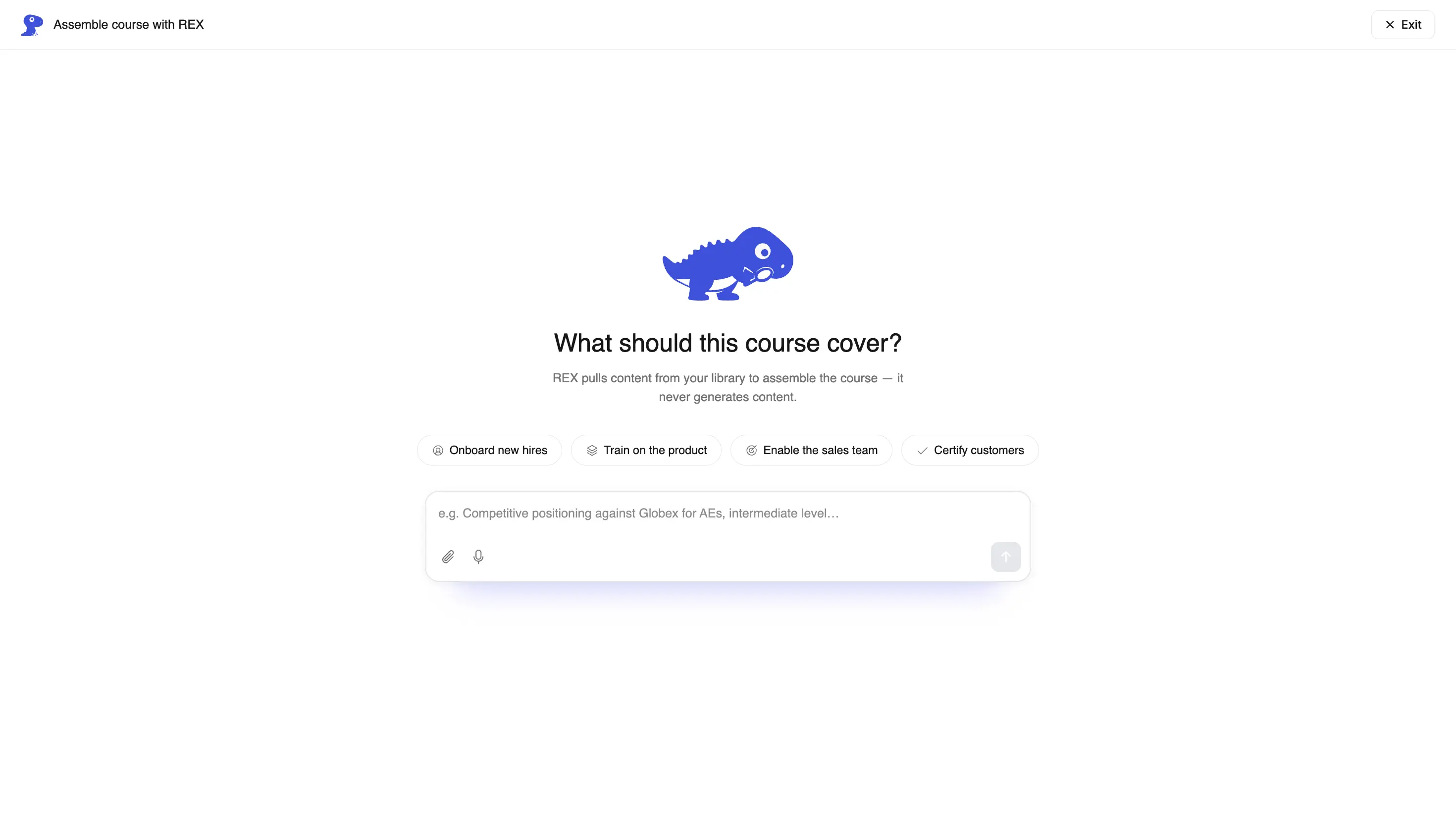
Courses built from content you already trust
Most teams build courses by hand, or let AI write something confident and wrong.
REX assembles it from what you've already built: decks, battlecards, recordings, and then drafts the structure. You decide what makes it in.
Courses that don't read like documents
Reps skim, tab out and retain nothing, because most “courses” are a document with a progress bar.
A freeform, block-based editor, the same one behind Flowla’s deal rooms: text, video, PDF, images, embeds, interactive widgets, structured into modules → lessons → content.
Every course looks like yours
If a course looks generic, reps assume it doesn’t matter.
Every course carries your colours, your logo, your whole look, the same as your customer-facing rooms. People engage with content that feels like it belongs.
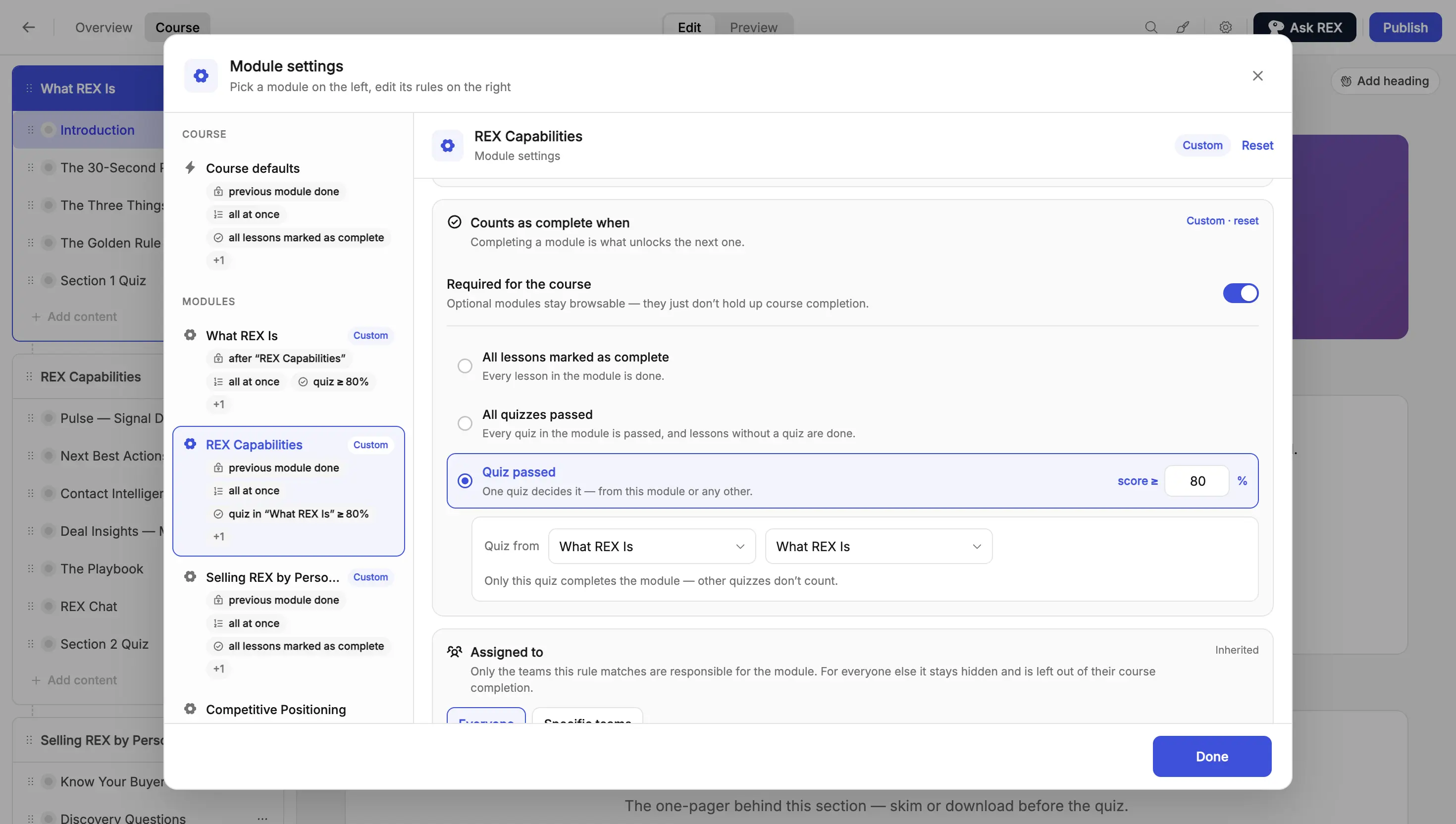
Real quizzes with real proof
A finished progress bar just proves a tab was open. Real quizzes go anywhere in a course, as checkpoints between modules or a gate at the end.







Blue = graded by REX, the rest grade instantly against defined answers
.webp)
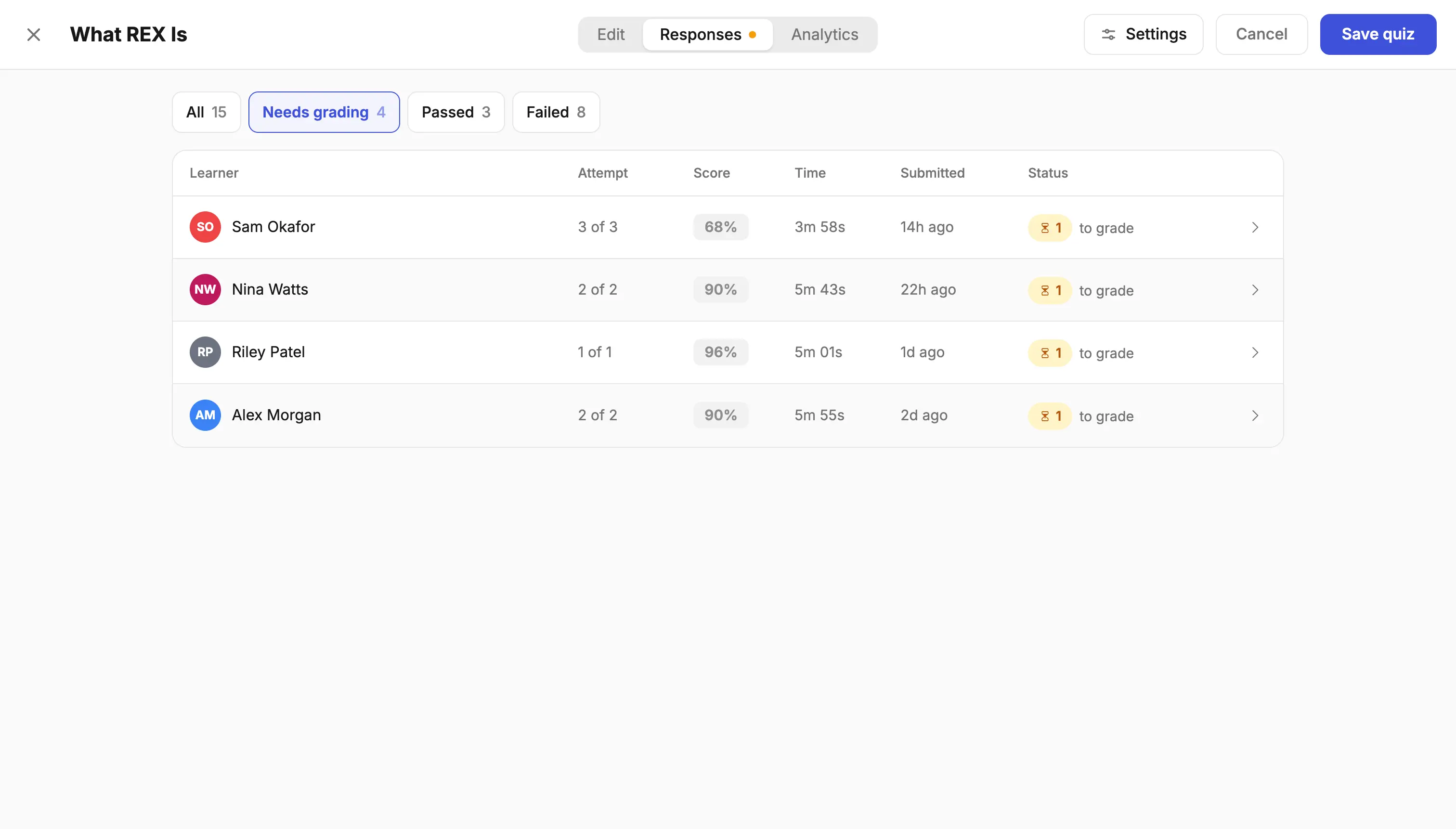
Let AI grade it, a human grade it, or both
Free-text and video answers are where real skill actually shows. Grading them no longer means a lost weekend by hand.
The rep submits; it lands in the manager's grading queue
The manager scores it and writes real feedback → for the video pitch that genuinely needs a person watching it
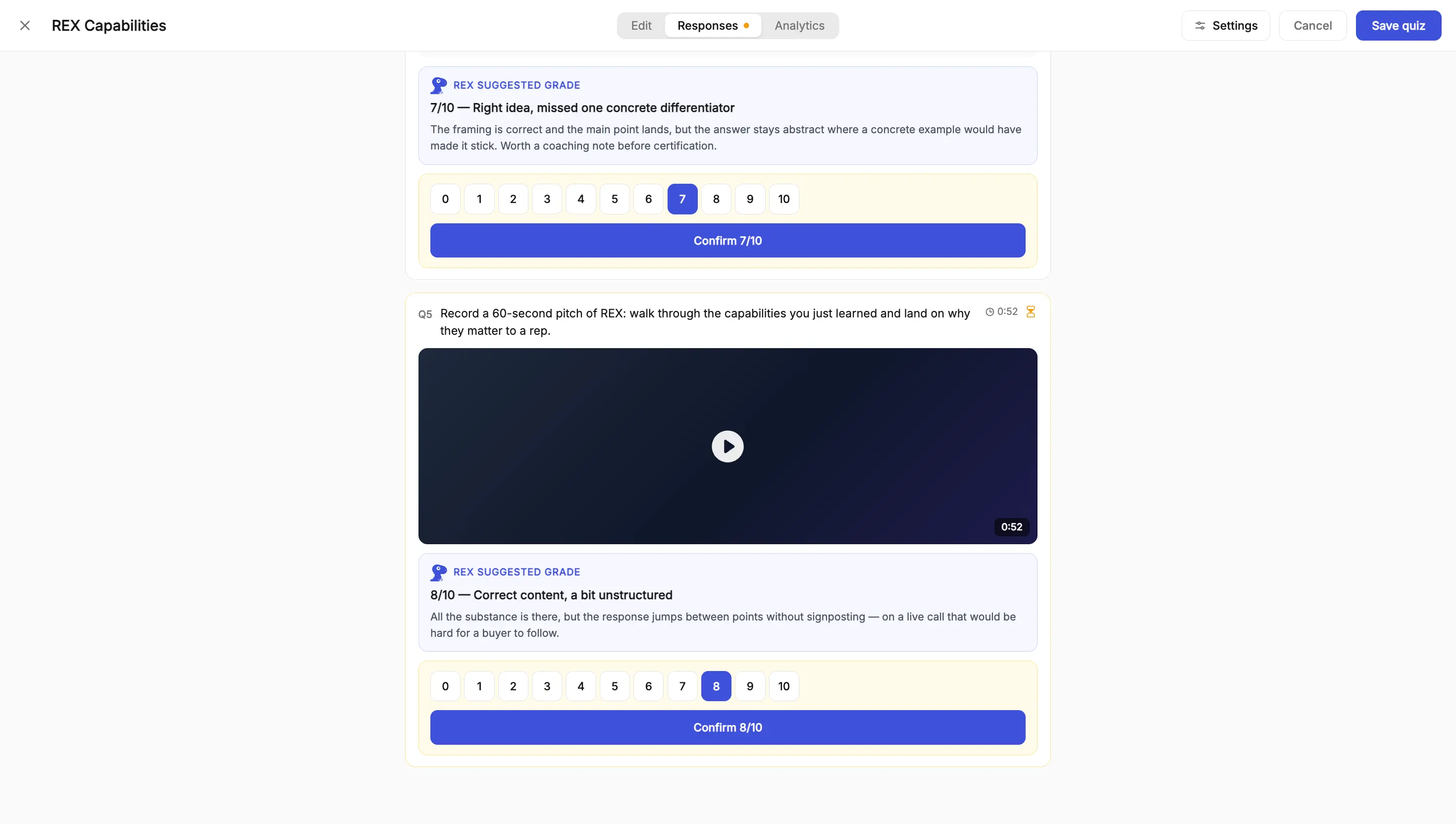
REX scores the answer and shows its reasoning
The manager approves or overrides in one click → a weekend of grading becomes an afternoon of reviewing
REX scores it and the rep sees the result immediately
No queue, no waiting on a manager's calendar → certification stops being something your team delivers by hand
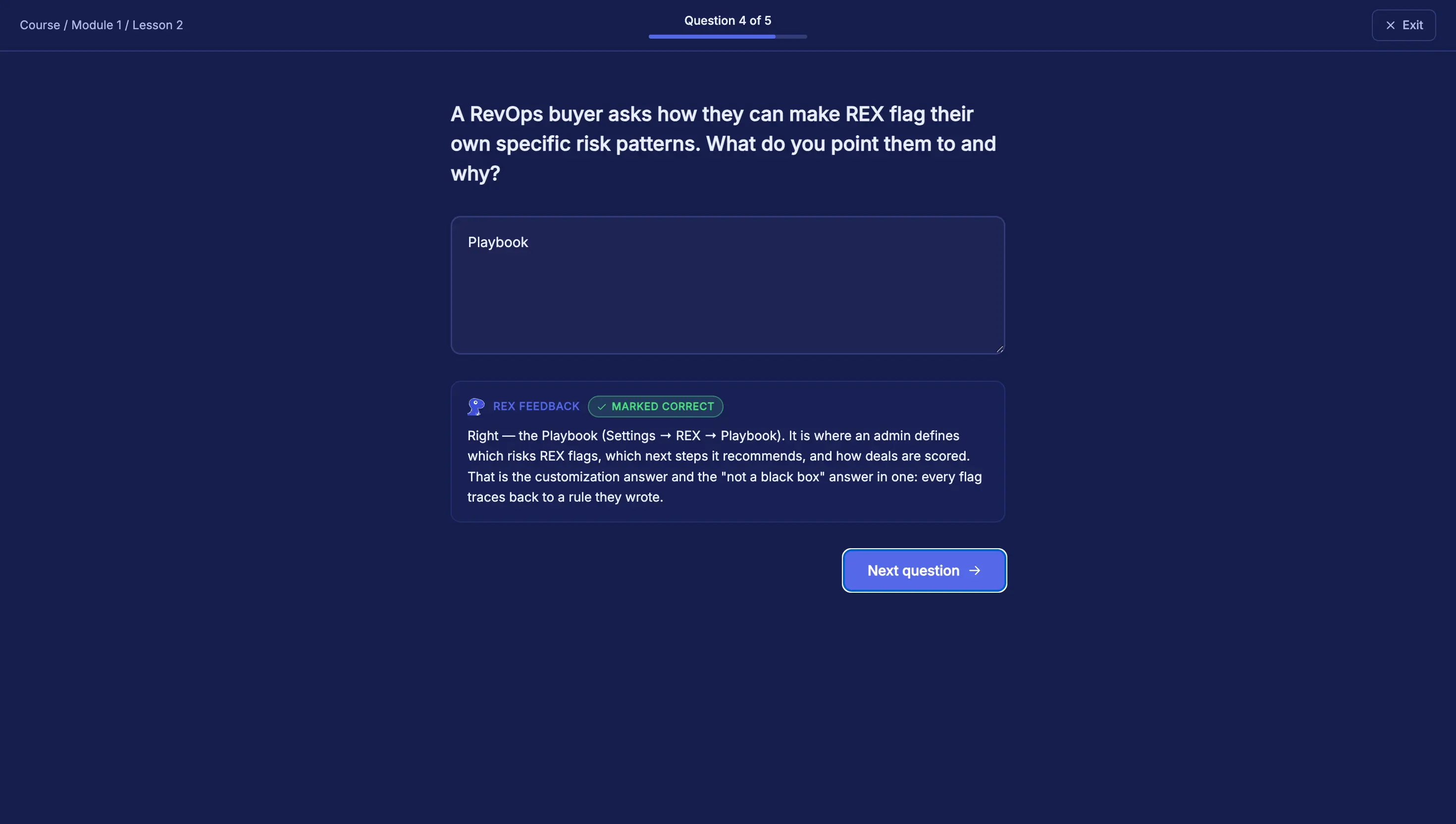
For video, REX watches whether the rep is reading from a script, whether the demo followed the path a real buyer would take, and more.
REX builds the path of how every rep executes
One course serves every audience without duplicating it. REX shapes the path around how each rep is actually performing in deals.
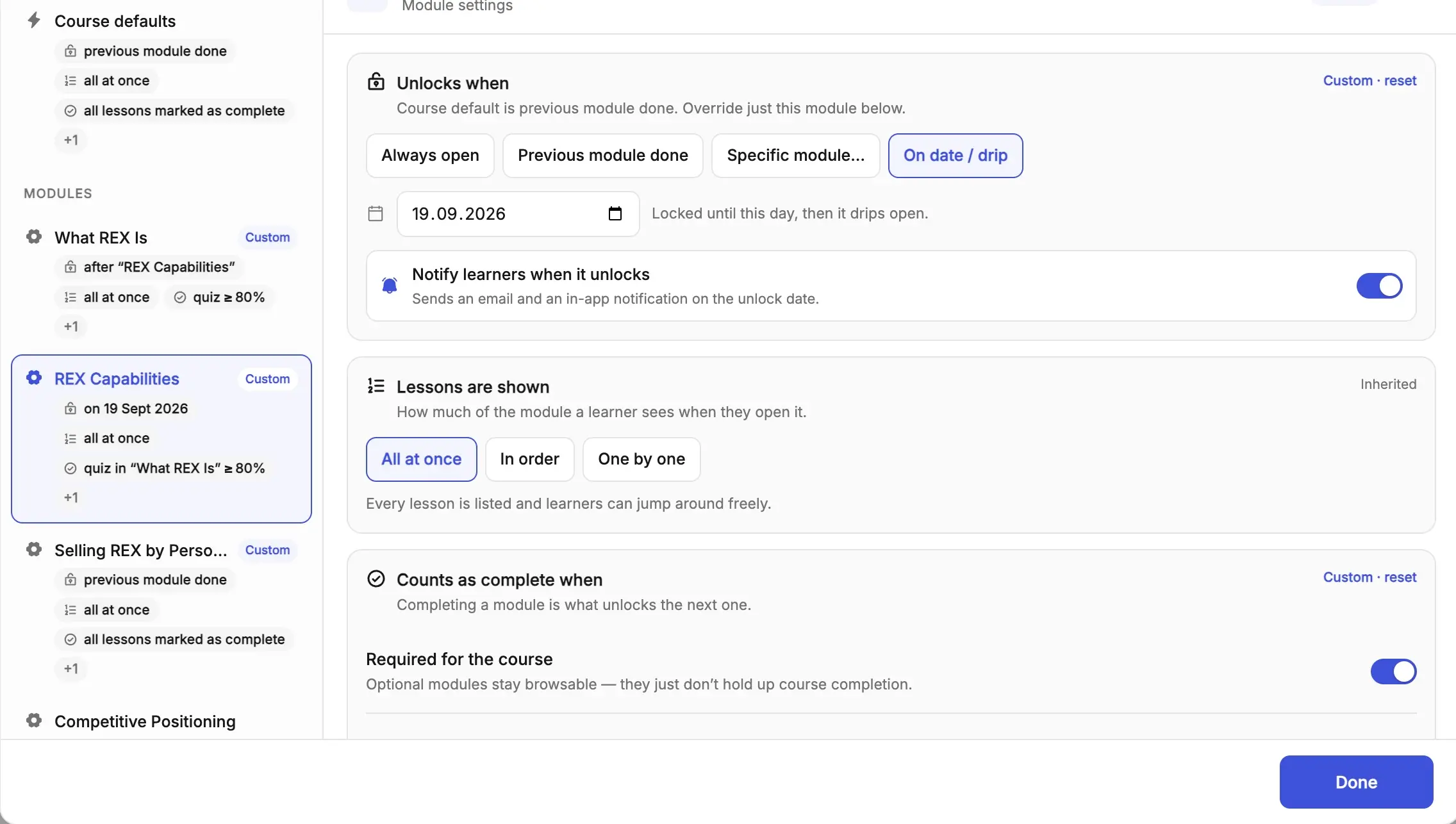
One master course, many audiences
Half a course is relevant to CS, half to AEs, and duplicating it means maintaining variations that drift out of sync.
Instead, show or lock individual modules per team, and only the assigned modules count toward that audience's completion.
.webp)
Knowledge that survives the week after
One-and-done training doesn't stick, and most teams have no way to reinforce it.
After a course completes, Flowla drips short knowledge checks on a schedule, linked back to the course rather than a new assignment. Quizzes work standalone too, for live sessions.
Nobody has to remember to assign anything
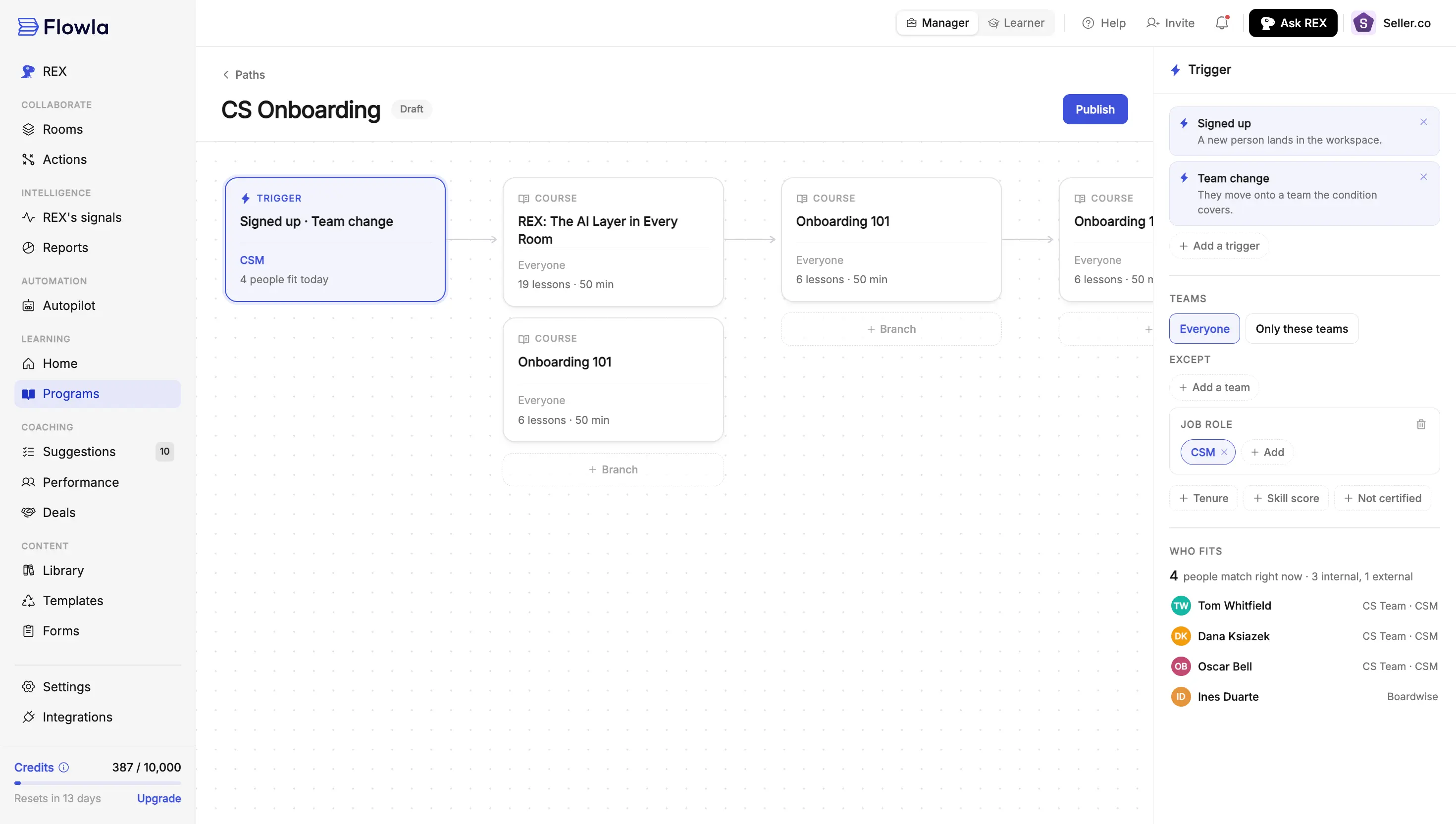
Someone always has to remember to assign onboarding, set every due date, and nag every straggler. With REX, you can:
- Auto-enroll new users into the right learning path on day 1
- Set fixed due dates (“by August 14”) or dynamic ones (“2 weeks after assignment”)
- Completion by pass threshold ( on one quiz, or an average across all), or by explicit complete-module and complete-course actions
- Notifications for assignment, progress and grading
- If-this-then-that triggers when a course or module completes
Know what's working, and who gets to see it
Per-question data that tells you which course is actually working, and a clean line between who can author a course and who can only grade it.
Set the rules for every quiz
Open the quiz in one tab and the answers in another, and most certifications are done in three minutes.
Per-quiz control: full lockdown, where navigating away counts as an attempt, or a relaxed open-book mode. Every attempt is logged, so you see who passed first try and which question tripped everyone up.
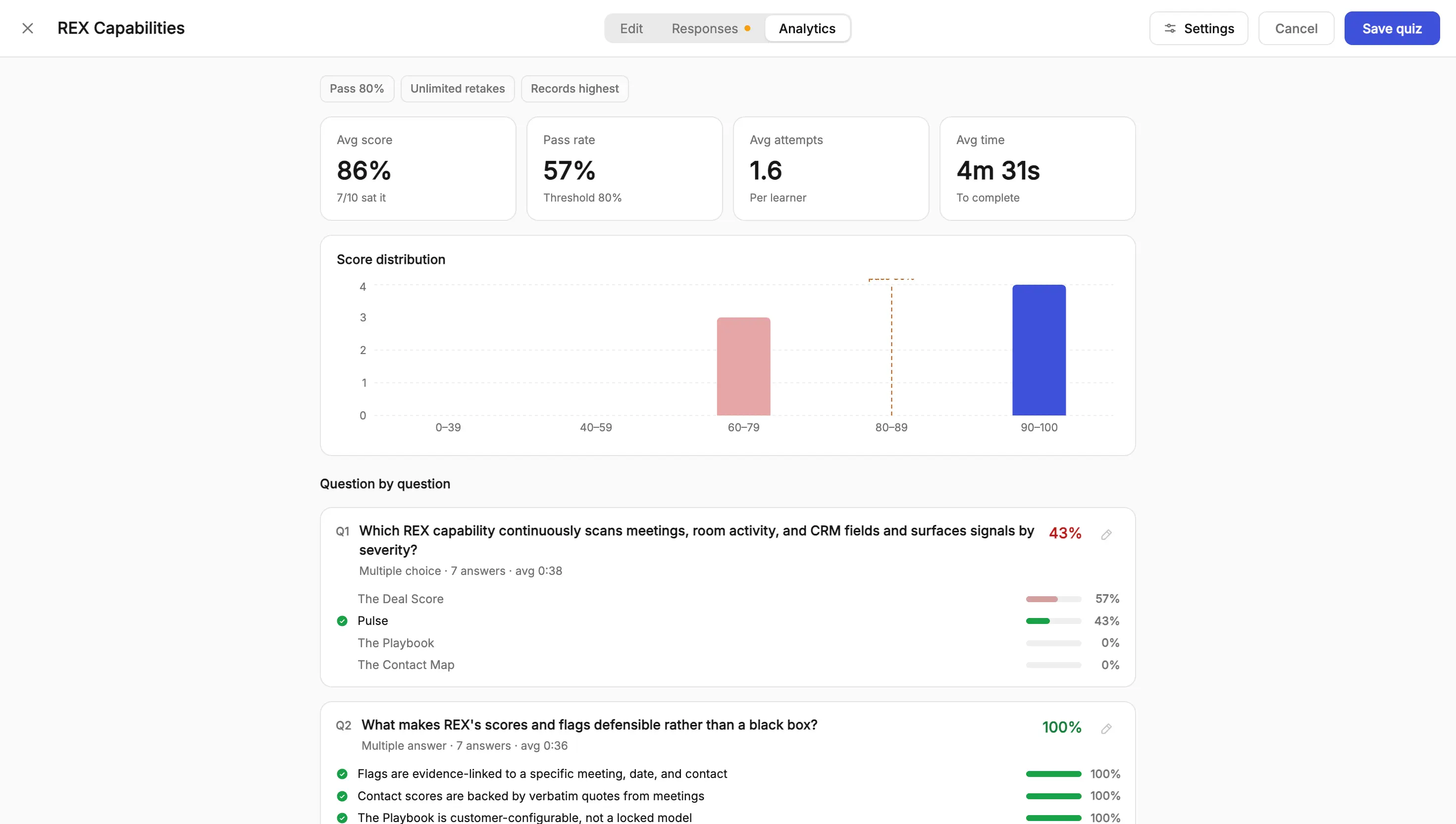
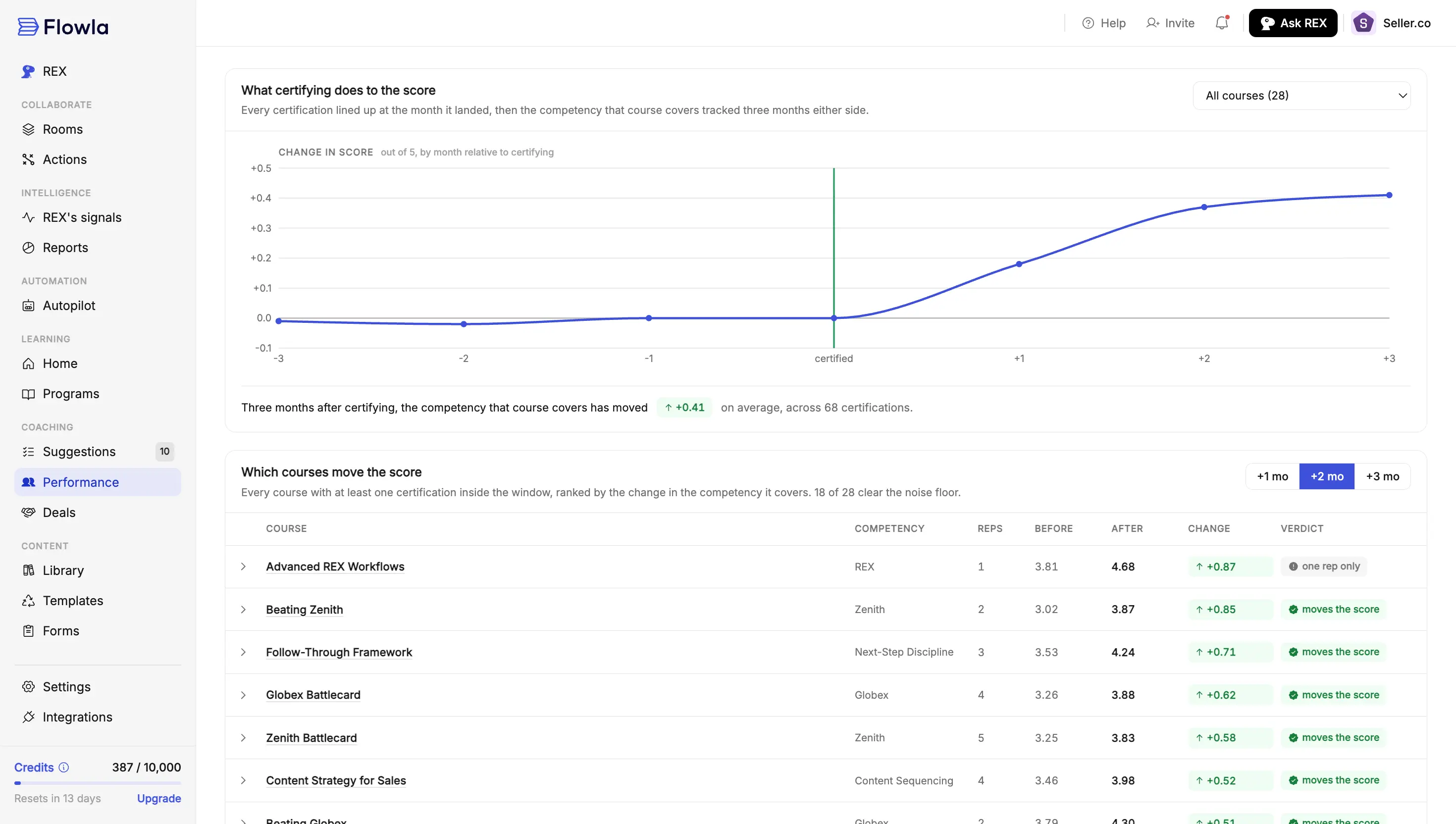
Find out if it's a bad score or a bad course.
Without per-question data, all you know is that people failed, not why. With REX, you can:
- Enrolled count, with the internal / external split
- Completion rate and average score
- Per learner: last active, sittings, time actively spent, quiz scores, status
- Average time per module, so you can estimate a new course honestly
- Attempt logs and question-level patterns that show which question needs rewriting
Explore the rest of Learning & Coaching
Learning & Coaching
How the whole loop fits together: REX watches the real work, closes each rep's gap, and proves it moved the deal.
Profiles & Reporting
What a rep’s learned, what they actually do in deals, and whether it’s closing the gap.
Frequently Asked Questions
What question types are supported?

Multiple choice, single choice, matching, ordering, true/false, open text, and recorded video answers. The first five grade instantly against defined answers; open text and video go to REX.
Does REX build the course, or do we?
REX drafts it from assets already in your library (your decks, battlecards and recordings) and you approve, edit or swap anything before it ships. It doesn’t invent content.
What happens to a course when the underlying content changes?
REX can update an assembled course as the source assets change, so it doesn’t quietly go stale six months after launch.
Can a quiz exist without a course?
Yes. Standalone quizzes let a live training or an in-person session be “completed” by passing the quiz afterward, and they’re what the drip reinforcement checks use.
How many attempts does a rep get?
You configure it per quiz, and every attempt is logged. In full-screen lockdown mode, navigating away counts as an attempt.
Can one course serve two different teams?
Yes, that’s dynamic module visibility. Show or lock modules per team or group, and only the assigned modules count toward that audience’s completion. You maintain one course, not five variants.
Can we set due dates automatically?
Either fixed (“by August 14”) or dynamic (“two weeks after assignment”), so an onboarding path works for someone starting in March and someone starting in November without being rebuilt.
Is completion the same as certification?
No, and they’re deliberately separate. One course can earn a certificate, or a whole learning path can, and requirements can differ by role. More on the Learning Profiles page.
Can we assign courses to partners or customers?
Yes. Courses can go to internal or external audiences, and enrolment reporting splits the two so you can see them separately.
Will an unpublished edit show up to learners?
No. Edits save as draft until you republish, so a course in the middle of being rewritten stays as learners last saw it.
Courses built fast, proven to work.
Built fast from content you trust, delivered on brand, and graded by REX. Then tied straight back to what actually happens in a deal.
.webp)
.webp)
.webp)
.webp)
.svg)

.webp)
.webp)